The Things That Happened in Between: Why We Protect the Stories We Tell About Our Childhood
For anyone who prefers listening to reading, this AI-generated audio (created with Google NotebookLM) offers a gentle summary of the key ideas in my blog.
On my podcast, It Ends With You, I always begin with the same question: "Tell me about your childhood. What was it like growing up in your family?"
It's an intentional question. The podcast is a space for everyday people to share the family stories we rarely talk about, sometimes not even with our closest friends. We talk about interrupting inherited patterns, reclaiming our truth, and ultimately freeing the next generation from having to live out the same unhealthy patterns.
And something interesting has happened with every guest I've interviewed so far. Each has experienced some kind of awakening about what they needed growing up but didn't receive. Yet when I ask about their childhood, do you know where they almost always begin?
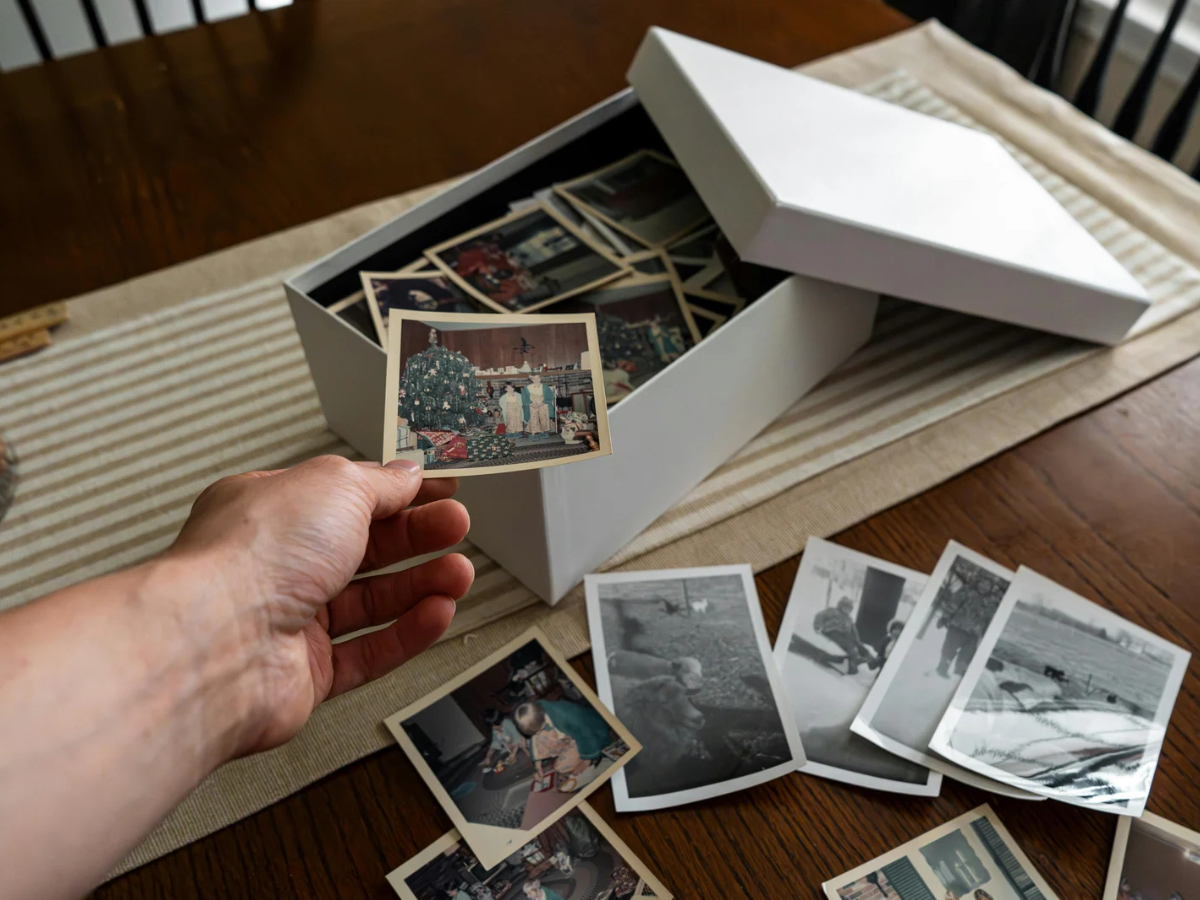
With the good. The happy memories, the family vacations, the opportunities their parents worked so hard to provide, the sacrifices made so they could have a better life. There is tremendous love and gratitude for what was there. And then, slowly, we begin to hear about the things that happened in between.
The moments that weren't so beautiful. The experiences that shaped them just as much as the happy memories, perhaps even more. But often, these stories come with hesitation, careful explanations, and an almost immediate need to defend their parents.
"They did the best they could."
"They had it much harder than I did."
"I know they loved me."
And all of that may be absolutely true. But what about the rest of the story?
The story we tell, and the one we carry
In a recent Healing Roots Circle, I invited participants to reflect on two questions:
When you think about your childhood, what story do you usually tell? And what might that story be protecting you from feeling or remembering?
One participant shared something that stayed with all of us. He began with the familiar story. A happy childhood, sports, two older sisters, present and dedicated parents.
And then he paused.
He realized that this story was also protecting him from remembering the things that happened in between. The drinking, the fighting, the perfectionism, a mother who was slowly shutting down emotionally. And the devastating loss, years later, of his sister to suicide.
The room went quiet.
There was nothing to fix. Nothing to explain away. Just people together witnessing the courage it takes to hold both truths. A childhood filled with love and beautiful memories, and a childhood marked by experiences that were deeply painful.
Both were true. And what strikes me most is that he isn't alone.
What happened in between?
After more than a thousand coaching sessions, I've heard countless versions of these stories. And here's what I've come to understand: so much of what shapes us doesn't happen in the big, obvious moments. It happens in the ordinary, repeated experiences of everyday family life.
It's the things that happened in between.
It's growing up with parents who were often absent because they were working so hard to provide, while quietly longing for more of their presence.
It's bringing home a 98 on a test and being asked what happened to the other two points.
It's walking on eggshells because you never knew when Dad might explode.
It's becoming your mother's emotional support because she was carrying more sadness or anxiety than she knew what to do with.
It's witnessing infidelity, betrayal, or the desperation of a parent who felt powerless to leave.
It's being told to stop crying, that you're too sensitive, or that there's nothing to be upset about.
It's being spanked, humiliated, or threatened in the name of discipline and love.
It's learning that love and approval came more easily when you performed or achieved.
It's watching one parent criticize and control the other.
It's being the sibling of a seriously ill child and learning that your needs could wait.
It's being the family joke, with teasing and humiliation disguised as humor.
It's hearing "after everything we've done for you" whenever you expressed disagreement.
It's being praised for being mature and independent when you had simply learned not to need too much.
It's growing up in a home where conflict was never repaired. Everyone simply moved on.
It's having a parent who was physically present but emotionally unavailable.
It's feeling responsible for keeping the peace or making everyone happy.
It's being loved and cared for, but rarely being asked how you actually felt.
It's discovering that being yourself sometimes came at the cost of belonging.
And the list goes on.
Some of these experiences are clearly harmful. Others may seem ordinary, even insignificant, especially when viewed through the eyes of an adult. But to a child, they can mean everything. Because children don't just experience what happens around them. They make meaning out of it.
A child who is repeatedly criticized may begin to believe, "I'm not good enough."
A child who has to manage a parent's emotions may learn, "Other people's needs matter more than mine."
A child who is loved most visibly when they achieve may conclude, "I have to earn love."
And a child whose feelings are dismissed may decide, "What I feel doesn't matter."
These aren't necessarily conscious decisions. They're adaptations, often necessary ways of finding safety, love, and belonging in the environment we were given. And long after childhood ends, we may continue living by the rules we learned there.
Why is it so hard to tell the whole story?
I believe one of the biggest reasons we hesitate to speak about our childhood wounds is that we don't want to hurt our parents. We love them. We appreciate what they gave us and understand their sacrifices. We know that many were parenting with very little emotional support, awareness, or understanding of their own wounds. And perhaps we're afraid that acknowledging what hurt us somehow means we're ungrateful, disloyal, or that we're calling them bad parents.
But there's another reason, and I believe it's just as powerful. We're afraid of what we might feel if we allow ourselves to go there.
What if the sadness is too much? What if the anger overwhelms us? What if opening that door brings up something we don't know how to handle?
So we push it down, we rationalize, we keep busy, we convince ourselves it wasn't that bad and we become very good at not feeling what hurts.
And here's something worth considering: When we continue to dismiss our own pain, aren't we, in some ways, doing to ourselves what may have been done to us growing up?
Ignoring our feelings. Minimizing our experiences. Telling ourselves to move on. Once again, the child within us is left unheard.
Ignoring pain doesn't necessarily make it disappear. Often, it simply finds other ways to express itself.
We don't have to open every door at once. We can approach our story gently, at a pace that feels safe, with the support we need. Because the goal isn't to overwhelm ourselves with the past. It's to stop abandoning the parts of ourselves that needed care. And we can do that while still honoring our parents.
Can we be grateful for what they gave us without denying what we needed and didn't receive? Can we have compassion for their limitations while acknowledging their impact on us?
Of course we can. Gratitude and grief can coexist. Love and disappointment can coexist. Understanding why something happened doesn't erase how it felt. And acknowledging the pain doesn't cancel the love.
The courage to name what was
There is something profoundly courageous about a person willing to look honestly at what has been carried through generations. To name what everyone else has learned to ignore, to feel what others have tried to numb, and to question patterns that have always been accepted and pretended as normal. I call these people cycle breakers. And I'm constantly in awe of their courage.
Because this work isn't always welcomed. Sometimes the person asking questions is called dramatic, too sensitive, ungrateful, difficult, or even crazy. "Why can't you just move on?" "Why do you always have to bring up the past?"
And sometimes those voices become our own. We tell ourselves we're fine, that it wasn't that bad, that other people had it worse, and that there's no point in digging up the past.
But what if looking back isn't about staying stuck in the past? What if it's about finally understanding what we've been carrying all along?
As Vienna Pharaon explores in The Origins of You, our early experiences can create origin wounds that continue influencing how we relate to ourselves and others and these wounds do not mean we are broken.
They help us understand where love, safety, connection, or acceptance may have been interrupted. Where we learned to protect ourselves, to adapt, and perhaps to become someone we thought we needed to be in order to belong.
We cannot undo what happened. But we can begin to understand it, meet ourselves with compassion, and recognize which patterns no longer serve us.
Healing isn't about blaming our parents or keeping a record of everything they got wrong. It's about becoming curious about our own story, meeting the younger parts of ourselves with the compassion and tenderness they may not have received, and recognizing the ways we adapted to survive.
Because awareness gives us something we may not have had as children: a choice.
The choice to respond differently, to relate differently, to parent differently, and to stop passing along what was never ours to carry in the first place.
What story are you still protecting?
So today, I want to leave you with an invitation. Not to judge your childhood or find someone to blame. Not to dismiss the beautiful memories, the love, or the sacrifices. But to make room for the whole story.
Perhaps there are parts of your story you've learned to minimize because they don't seem important enough. Perhaps there are feelings you've dismissed because you know your parents meant well. Perhaps you've spent so much time understanding everyone else's experience that you've never fully made room for your own.
What if you could finally give yourself that room? With curiosity, gentleness, and compassion for your parents, and just as much compassion for yourself. Because the child you once were deserves to have their experience acknowledged, too.
And you don't have to stop loving your parents to begin honoring yourself.
Two questions to sit with
If you have a few quiet moments this week, I invite you to take out your journal and reflect on these two questions:
When you think about your childhood, what story do you usually tell?
What might that story be protecting you from feeling or remembering?
There's no need to force an answer or search for something painful. Simply notice what comes up, and meet it with kindness. You might discover that the story you've always told is true. And that there's more to it.
Perhaps healing begins when we finally make room for the things that happened in between. Because we cannot change the story of where we came from, but we can change what we continue to carry forward.
And that is how cycles begin to break. That is how we reclaim our truth. And that is how we begin to free the generations that come after us. It ends with you.