
Boundaries, Belonging and the Beauty of Mwe
For anyone who prefers listening to reading, this AI-generated audio (created with Google NotebookLM) offers a gentle summary of the key ideas in my blog.
I am writing to you from my cozy little corner here in Stockholm, surrounded by candles and soft light. The days are the shortest I have ever lived. Even Seattle winters do not come close. There is something about these long Nordic nights that invites silence. A pause. A breath. And from that quiet place, this month’s reflection came through very naturally.
The holidays can be beautiful, but they also carry a weight many of us feel in our bodies before we admit it in words. There is the pressure of gifting. The pressure of family expectations. The pressure of showing up with joy even when grief is sitting at the dinner table with us. The pressure of keeping the peace, of not disappointing anyone, of stretching ourselves thin because “this is what the season is about.” There is travel stress, financial strain, emotional labor, old patterns resurfacing, and the familiar ache of wanting to belong while also longing for rest.
This is why boundaries matter so deeply right now.
In the Healing Roots Circle, we have spent meaningful time with the Boundaries chapter in The Origins of You by Vienna Pharaon, because boundaries are truly golden. They are one of the most essential and tender parts of breaking cycles. They help us stay rooted in ourselves while navigating the people we care about most.
Boundaries are not walls. They are not punishments. They are invitations to deeper honesty. They are acts of self-respect. They are the quiet ways we protect our energy, our dignity, and our very human need for emotional safety.
To bring this to life, I want to return to a metaphor I love and hold close, having come to it through my own work and reflection. It is also a metaphor that I have seen resonate with others over and over again.
The Garden
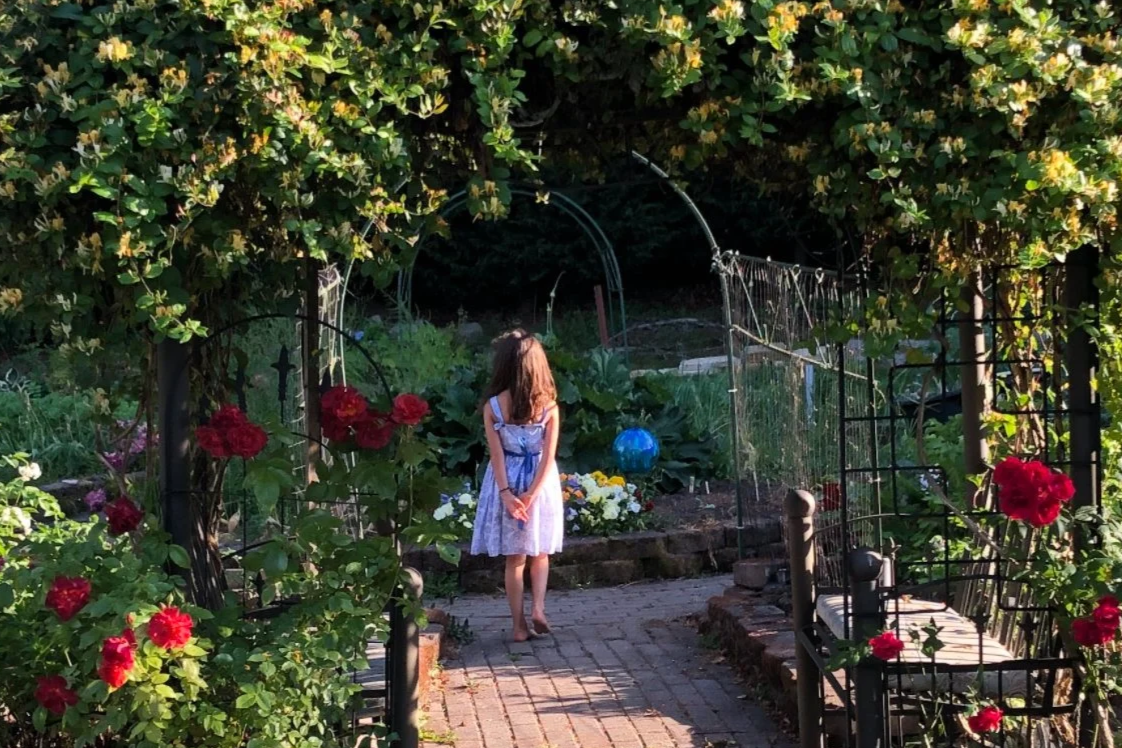
Imagine you have a small garden behind your home. It is your favorite place. You planted the flowers yourself. You know where the light lands at noon. There is a chair where you sit and breathe.
Now imagine the people in your life walking through this garden whenever they want. Some step gently and enjoy the flowers with you. Others rush through without noticing what is precious. Some rearrange things because they think they know better. And a few come so often that you barely have space to tend the garden at all.
For years, you allowed it because you feared that closing the gate meant losing connection. Or because no one ever taught you that a little gate was allowed. Or because as a child, you learned that keeping everything open kept everyone calmer, safer, happier.
Until one day, you notice the soil has thinned. The flowers look tired.
You look tired.
And something in you whispers, this is not working.
So you build a simple gate. Not a fortress. Just a clear boundary. You open it when you feel ready to welcome someone in. You close it when you need quiet or nourishment.
At first, people who were used to walking freely feel confused. Some feel offended. Some feel rejected. But the gate is not a punishment. It is a commitment to your own inner garden.
And then something beautiful happens.
The people who truly care begin to knock.
They wait for your yes.
They ask how the garden is doing.
They appreciate being invited instead of assuming they belong inside at all times.
Your relationships become more respectful. More honest. More alive.
And slowly, the garden blooms again in ways you forgot were possible. This is what boundaries create.
The Guilt that Keeps the Gate Open
Many of us struggle with boundaries not because others break them, but because we break them ourselves. Out of guilt. Out of fear of losing connection. Out of the old belief that being chosen means staying available at all times.
That is the cycle. That is the pattern.
And this season is the perfect time to meet it with compassion and courage.
Love, Fear, and the Plane of Possibility
Earlier this fall at the Trauma Transform Conference in Oxford, which I had the privilege of attending, Dr. Daniel Siegel said something that has stayed with me ever since.
At the heart of everything we pour into our relationships, whether with family, friends, colleagues, or communities, there is one underlying truth. We all want to love and to be loved unconditionally.
But what we often forget is that fear and grief sit on the other side of love. These fears are exactly what keep us from setting and honoring healthy boundaries. And they also keep us from stepping into a new plane of possibility.
Because uncertainty creates freedom.
And freedom opens possibility.
And nothing, absolutely nothing, can take that away.
Dr. Siegel reminds us that it is not Me versus We. It is something he calls Mwe.(1)
Me is your individual inner world. Your body, your needs, your boundaries.
We is belonging. Attunement. Empathy. Community.
Mwe is the truth that there is no real separation. We become who we are through relationship. Our wellbeing is both individual and collective. Health or injury to one part affects the whole.(2)
I like to think of it as the Branch Out tree.
The tree has its own trunk, roots, and leaves. That is Me.
It grows within a forest. That is We.
And the reality is simple. A tree cannot survive without the forest.
And the forest cannot survive without its trees. The roots are all intraconnected.
That is Mwe.
This intraconnection was so palpable for me as we closed the very first Healing Roots Circle. Their pain was also my pain, just expressed through different lifetimes, different bodies, different stories. And through that recognition, the boundary between “your hurt” and “my hurt” softened, and what remained was our shared humanity.
Boundaries as a Path Back to Connection
“Connection is a flow of energy.” - Dan Siegel.
When that flow is disrupted, we often panic and assume the connection is gone.
But if we are connected through our roots, our shared soil, our shared humanity, then even when the flow slows down, it is still there. It is simply inviting a new way of relating.
This truth gives me hope. It reminds me that honoring my boundaries does not close the door to love. It actually opens the door to a deeper, more sustainable kind of love.
One that is honest.
One that is reciprocal.
One that allows both Me and We to thrive.
A love that makes space for Mwe.
Returning to Essence of the Season
The holidays were always meant to be much simpler and sacred. These moments were meant to help us pause, reflect, and contemplate our lives. But in the rush of modern living, commercialization, fast pacing, and the lack of spaciousness, we drift away from that essence.
The real invitation of this season is to go inward, reconnect with what truly matters, and gently align ourselves with what is most meaningful.
And when we do this, we naturally return to the same themes that guided this entire newsletter.
Boundaries that protect what is sacred inside us.
Belonging that honors both self and other.
And the beauty of Mwe, where our individual growth and our collective care meet, strengthen one another, and depend on each other to exist.
In many ways, the stillness I feel here in Stockholm, with its long nights and soft candlelight, is a reminder of exactly that. The season itself nudges us to slow down, return to ourselves, and rediscover the essence the holidays were always meant to hold.
May this be a season where you tend your garden with gentleness.
May you honor your boundaries with courage.
May you feel held by both Me and We.
And may you enter the new year connected to the deeper truth of Mwe, where your growth and the world’s growth meet in the same beautiful place.
Related Reading
In a separate reflection, that I wrote during the holidays last year, I write about growing up with apagones, unexpected power outages, and how those moments of shared stillness brought my family into deeper presence with one another. When the noise fell away, connection didn’t disappear. It deepened. That, too, is MWe. You can read it here.
Notes & References
(1) On MWe: The concept of MWe comes from Dr. Daniel J. Siegel’s work on integration and relational identity. In his book IntraConnected: MWe (Me + We) as the Integration of Self, Identity, and Belonging (published November 2022), Dr. Siegel explores how our sense of self does not emerge in isolation, but through relationship. Rather than positioning “Me” and “We” as opposing forces, IntraConnected reframes wellbeing as something that is simultaneously individual and collective — an internal and relational integration where identity, belonging, and connection are inseparable.
(2) On Intraconnectedness: While talking about this, Dr. Siegel draws an analogy to the Pando, often called The Trembling Giant. Located in Fishlake National Forest in Utah, Pando appears to be a forest of individual quaking aspen trees, but is actually a single living organism. All of its trunks share one interconnected root system and identical genetic material. Estimated to be over 80,000 years old and weighing around 6,000 metric tons, Pando is considered the oldest and heaviest known living organism on Earth. It is a powerful reminder that what looks separate above ground is deeply connected below — and that survival depends not on isolation, but on shared roots.